Electrification is changing how Australian homes and businesses use energy. With more electric vehicles, rooftop solar, battery storage, and heat pump hot water systems, people need smarter ways to manage power.
SaaS for EV charging brings simple software tools that help owners and managers save money, reduce emissions and keep equipment working well.
This post explains SaaS for EV charging: smart home & business electrification, and how SaaS platforms make electrification easy and practical for Australians.
In this blog post:
- The Growing Need for Smart Electrification
- What Is SaaS for EV Charging?
- How SaaS Helps Australian Homes
- How SaaS Supports Business Electrification
- SaaS Platforms Are Designed to Coordinate All Key Electrification Tech:
- Why Load Management Matters
- Choosing the Right SaaS Platform
- SLA’s Electrified Solutions
- Policy and Market Trends in Australia
- Practical Steps to Electrify a Home or Business
- Future Trends in EV Charging & Smart Electrification
- The Bottom Line for EV Charging SaaS
The Growing Need for Smart Electrification
Australia is seeing fast growth in electric vehicles and rooftop solar. The Australian Energy Market Operator and other groups show that electrification can cut emissions and energy costs.
Going electric also helps homes and businesses use clean energy from solar and batteries.
But without smart control, more electric devices can stress the grid and raise energy bills. SaaS helps manage that change.
What Is SaaS for EV Charging?

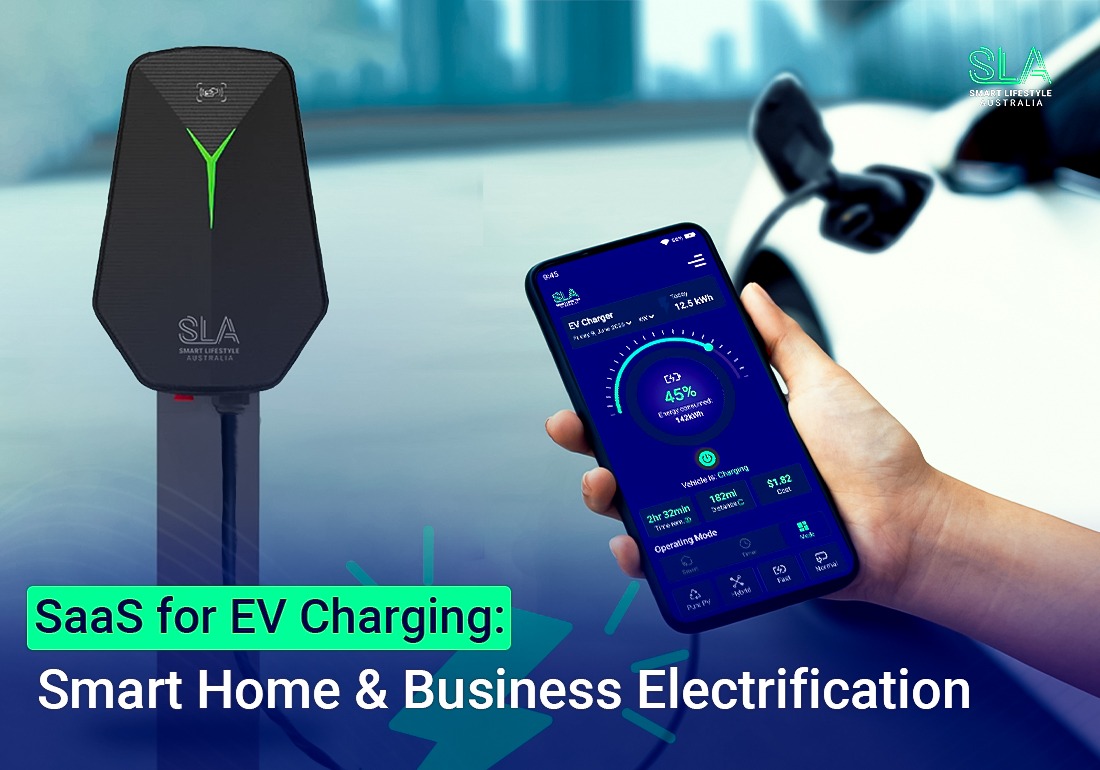
SaaS stands for Software as a Service. For EV charging, it means cloud-based software that runs and manages charging stations, energy flows and user access.
Instead of local servers and complex setups, the Best SaaS platforms use the internet to give simple tools for:
- Scheduling and controlling charge times
- Tracking energy use and costs
- Balancing solar, batteries and charging
- Managing multiple charge points for businesses
- Integrating with billing and payment systems
How SaaS Helps Australian Homes
Smart SaaS platforms make home electrification easier and cheaper.
Key benefits include:Lower energy bills: Software can charge vehicles when solar is available or when tariffs are low. This reduces grid imports and saves money.
Better use of solar and batteries: The platform can direct rooftop solar to EVs or home loads. It can also choose when to use battery storage to avoid peak rates.
Simple control: Homeowners can use apps to start, stop or schedule charging from anywhere.
Future-ready: SaaS updates over the air, so new features and local rule changes are added without extra work.
Home Use Cases
Here is how homeowners are applying SaaS to make electrification smarter and more cost-effective.
- EV charging on solar: Charge the car during the day when the sun is strong to cut grid use.
- Load balancing: Keep heavy loads like electric heat pump hot water systems and EV charging from running at the same time.
- Backup and resilience: Use batteries and smart controls to keep essential loads running during outages.
How SaaS Supports Business Electrification
For businesses, SaaS platforms are vital when installing multiple chargers or managing energy across sites.
Benefits include:Centralised monitoring: Manage multiple chargers from a single dashboard.
Fleet management: Track charging for many vehicles and set priority rules.
Revenue and billing: Offer paid charging to staff or customers with easy billing reports.
Demand management: Reduce peak demand charges by controlling when chargers run.
Compliance and reporting: Produce simple reports for regulators and the energy market.
Business Use Cases
Here are some common ways businesses are already using SaaS to support electrification.
- Retail and hospitality: Offer public charging and manage payments.
- Offices and fleets: Schedule overnight charging and track costs.
- Apartment buildings: Share charge points and bill residents fairly.
SaaS Platforms Are Designed to Coordinate All Key Electrification Tech:
SaaS platforms connect every major energy device so they work together as one smart system.
Solar and Batteries:Software decides when to use solar to charge vehicles or store energy. This increases self-consumption and lowers energy bills.
Hot Water Heat Pumps:A heat pump hot water system can be scheduled to run when solar is available. That saves on running costs compared to electric resistive hot water.
Whole-Home Energy Management:Smart SaaS platforms treat the home or business as one system. They optimise energy flows to reduce waste and cost.
Why Load Management Matters
Without control, many chargers and appliances can cause large demand peaks. These peaks can raise energy bills and stress the grid.
Smart SaaS avoids this by staggering charging, curbing non-essential loads and using stored battery power during peaks.
For businesses, this can mean big savings on demand charges.
Costs and Savings
Upfront costs for chargers, batteries and heat pumps vary. But SaaS can speed the payback by:
- Lowering operating costs through smart charging and solar use
- Reducing peak demand charges
- Enabling paid charging services that create new revenue
- Increasing the longevity of batteries by managing charge cycles
Choosing the Right SaaS Platform

Consider these points when picking a platform:
- Australian support and compliance: Make sure the platform understands local rules and tariffs.
- Easy to use: Simple apps and dashboards help adoption.
- Integration: Look for compatibility with common chargers, battery brands and solar inverters.
- Security: Data protection and secure communication matter.
- Scalability: The platform should grow with more chargers, vehicles or sites.
SLA’s Electrified Solutions
Smart Lifestyle Australia offers excellent products that suit a range of needs. Our SLA products include EV chargers, heat pumps, induction cooktops, aircons, batteries, and EMS that work well with smart SaaS controls.
Use SLA products that are compatible with the SaaS platform you choose and that have local support in Australia.
Policy and Market Trends in Australia
The Australian Energy Market Operator, the Australian Energy Regulator, and CSIRO publish guides and reports on electrification.
Programs and rebates from state governments help the uptake of solar, batteries and heat pumps.
Keep an eye on these sources for incentives and rules that affect costs and installation.
Practical Steps to Electrify a Home or Business
Here is a clear roadmap to help you plan and implement an electrified home or business.
- Audit energy use: Know current consumption and peak times.
- Check your roof and solar: Assess how much solar you can generate.
- Choose the right EV charger: Pick a model compatible with your SaaS platform.
- Add batteries if needed: Batteries smooth supply and reduce grid purchases.
- Consider a heat pump hot water system: It is cheaper to run and pairs well with solar.
- Pick a SaaS platform: Prefer one with local support, simple apps and good integrations.
- Install and test: Use accredited installers and test schedules to match your needs.
- Monitor and adjust: Use the platform to track savings and fine-tune schedules.
Tips for Smooth Adoption
Use these tips to make the transition to smart electrification easier.
- Start small: Add one charger and expand later.
- Use smart schedules: Charge during off-peak or high solar times.
- Plan for growth: If you expect more EVs, ensure the system can scale.
- Keep it simple: Choose easy settings to maintain high user acceptance.
Future Trends in EV Charging & Smart Electrification

Electrification in Australia is advancing rapidly, and SaaS platforms will play a larger role over the coming years. New chargers will offer faster speeds, better compatibility with home energy systems and more advanced load management features.
Vehicle-to-Home (V2H) and Vehicle-to-Grid (V2G) technology will also grow, allowing electric vehicles to power homes or support the grid during peak times.
SaaS platforms will coordinate these two-way energy flows so that battery storage, EVs, and rooftop solar work together.
Artificial intelligence will also help predict energy demand, tariff changes, and solar generation, enabling automated optimisation with very little manual input.
As energy markets evolve, SaaS tools will help households and businesses participate in VPPs, which offer payments for supplying stored energy during grid peaks.
These trends mean Australian homes and businesses will become smarter, more resilient and more energy-efficient every year.
The Bottom Line for EV Charging SaaS
SaaS for EV charging is a practical tool that makes electrification simple for Australian homes and businesses.
It ties together solar, batteries and heat pumps in a way that saves money and cuts emissions.
For anyone planning to add EV chargers or make their home or business smarter, a local SaaS platform could be an essential part of the plan.
Ready to electrify? Visit SLA to explore smart home and business products and find solutions that fit your needs.